For authors
We recommend that authors review the journal's “Editorial Policy”, where they will find detailed information on editorial ethics, the journal's subject areas, publication costs, types of articles published, and other topics of interest.

Title: Centred, in capital letters and bold, in Spanish and English, with a maximum of 20 words. We suggest avoiding the use of subtitles, ambiguous expressions, and abbreviations. Times New Roman, 24 points. The title must be included in English, Times New Roman 21 points in italics.
Author details: First names followed by surnames. If there are several authors, they should be listed one below the other on the far right, with textual numbering for further information on the researchers. The journal will respect the order chosen by the authors. Font: Times New Roman italics, 11 points. The footer will contain the authors' details, separated by commas. The author's correspondence address should be presented separately and may appear at the end of the article. All text should be in Times New Roman, 10 point font.
Abstract
In Spanish and English, reflecting the main elements of the article's content. It should be written in the third person and have a maximum length of 250 words. It should include: Objectives, research setting, methodology, results and conclusions. It is recommended to use words that express the content in a concise manner, omit abbreviations, acronyms, symbols or formulas, and avoid quotations and references to authors.
Keywords
In Spanish and English. Up to five (5) keywords or phrases in Spanish and English should be included, describing the most important topics or subject areas of the research. Keywords should be presented in alphabetical order. Standardised using a thesaurus (the UNESCO thesaurus is recommended).
INTRODUCTION
This should contain: a brief overview of the research topic and problem, the objectives and purposes of the work and its scope, justification, analysis of other possible previous studies on the same research topic, theories supporting the research, and well-selected citations and authors. It does not include data or conclusions from the work.
MATERIALS AND METHODS
The characteristics of the sample, the ethical component, the location, the study period, a description of the approach, the research method and materials, the techniques and instruments used to collect information, the population, the sample, and the process for analysing the information are presented in detail. In quantitative research, it is necessary to include information on the variables studied and the measurement methods and statistical methodology.
It is important to use graphical representations to clarify ideas and illustrate concepts and conclusions, such as:
Tables: Tables: Scientific articles and review articles use statistical tables that include information that cannot be considered in the text or that expands on what is mentioned in the scientific article; they are numbered consecutively with Arabic numerals and placed in the centre of the text following the APA style. Each table must be headed with the expression “Table 1” in bold, and the text of the table must be in Times New Roman 9.5. At the end, the source of the information in the table must be indicated in Times New Roman 9.5 font; if the table is based on other works, the bibliographic citation must be included. Furthermore, tables cannot be embedded as images; they must be editable. Only horizontal lines should be used to separate entries in the table.
Figures: The term “figures” includes graphs, maps, photographs, etc. They should be included only if absolutely necessary. They must be in JPEG or TIFF format, with a minimum resolution of 300 DPI. They should be numbered consecutively and placed in the centre of the text. They must include an explanatory caption at the bottom of the figure. The source of the figure must be included at the end of the caption, even if it was created by the authors. All figures must be referenced in the text as “Figure X”, where X is the corresponding number. Figures must be “inserted” into the text of the article and placed near the text where they are referenced.
Equations: They should appear centred with respect to the main text. Consecutive Arabic numerals (written in parentheses near the right margin) should be used to label equations, as in (1). All equations must be referenced in the text. Equations must be written in the MS Office Word® equation editor and not embedded as images in the text.
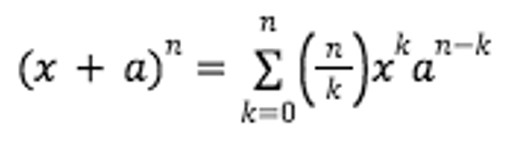
Refer to equations as “(1)”, not as “Eq. (1)” or “equation (1)”, except at the beginning of a sentence. It is important that the meaning and units used in each term of the expressions are fully defined. The use of the International System of Units (SI) is recommended. For all numerical quantities reported in the main text of the work and in equations, tables, and figures, a comma should be used to separate decimal places.
RESULTS
The relevant results of the research are reported, described, and organised. Present categories that serve to classify: subjects, situations, categories along with numerical distributions, statistical format. Sometimes it is necessary to distribute them in tables and figures, without repetition. “The results should be written in accordance with the objectives set out and in accordance with the methodology described”.
DISCUSSION
Comparisons are made between the results themselves and similar studies, preferably citing current scientific articles. This section discusses whether the results are consistent or inconsistent with the findings of your study and highlight any exceptions and points that cannot yet be clarified or have not been sufficiently clarified by the results. Suggest new research possibilities and propose ideas for further studies.
CONCLUSIONS
The conclusions are the final assessment of the research. Therefore, the researcher must record the fulfilment of the proposed objectives and summarise the results obtained throughout the research process. Avoid repeating the numerical results found.
ACKNOWLEDGEMENTS AND FUNDING
This section must mention the sources of funding (if any), detailing the name of the project and the number assigned to it. The acknowledgement must be written in a sober manner, not exceeding 60 words.
CONFLICTS OF INTEREST
All authors are required to explicitly declare any potential conflicts of interest, whether financial, professional or personal, that could inappropriately influence the results obtained or the interpretations proposed.
AUTHOR CONTRIBUTION
For articles with multiple authors, a brief paragraph should be provided specifying the contributions of each author to the conceptualisation, design and development of the research, and to the writing and final revision of the manuscript. In any case, all signatories must have made a substantial contribution to both the research and the manuscript, and both courtesy authorship, i.e. listing signatories who have not made such contributions, and ghost authorship, i.e. excluding researchers with substantial contributions, should be avoided.
It is assumed that the corresponding author, in addition to making a substantial contribution, guarantees and endorses that the authorship statements are accurate.
REFERENCES
The journal establishes its citation and referencing standards based on the IEEE Standard from 2025 onwards. References must be numbered consecutively, in order of appearance, not alphabetically, and in square brackets within the punctuation [1]. In the text, simply cite the reference number, as in [2]. Do not use “Ref. [2]” or “reference [2]” except at the beginning of a sentence.
Multiple references must be numbered with separate square brackets; if there are two, they should be indicated as follows: “... [3], [4]...”, and if there are more than two, they should be indicated as follows: “... [5]-[10]”.
Authors should carefully verify that all citations in the text of the article appear in the list of bibliographic references.
Only references that have been cited in the main text of the work, in tables or in figures should appear in the list. The number of citations and their references should be consistent with the work, its length and type.
The title of the referenced document must correspond to the language in which it was originally published, except for articles that are not in the Roman alphabet, in which case it must be included in English.
To include a citation, authors should consult original documents, preferably scientific documents, avoiding citing local reports with limited scope and visibility, or informal references such as web pages, blogs, among others.
References should be entered into the text using a reference manager. Although any of the widely used managers (Zotero, EndNote, among others) are accepted, we suggest using Mendeley (https://www.mendeley.com) for this purpose. Additionally, if your article is accepted, you must attach a file in .bib format containing each of the references included in the text.
The format indicated in the following link must be used: https://docs.google.com/document/d/1OalFYqVfxKKMelF79U3B93SjmIEiTnJC12wPJrKeSDM/edit?tab=t.
EDITORIAL PROCESS
Once the manuscript submission process is complete, the author will be notified of the success of the process and the following phases will then begin:
Preliminary evaluation: at this stage, a general review of the manuscript is carried out to verify that it complies with the structure and guidelines required by the journal in terms of structure, editorial policy, ethical policies and good editorial practices. Plagiarism, submission to multiple scientific journals, fraudulent use of data, and false claims of authorship are prohibited.
Once this stage is complete, the author shall be notified of the editorial decision, which may be: rejection due to non-compliance with requirements or a request for modifications to correct necessary requirements prior to editorial evaluation.
Verification of originality: the file containing the manuscript is uploaded to software called Turnitin, which detects where the information has been extracted from and indicates the sources. At this stage, it is determined whether the manuscript is contributing something new to knowledge or whether, on the contrary, it is based on previous work.
Editorial evaluation: the editorial evaluator critically, constructively and objectively analyses the content of the manuscript and decides whether it is within the scope and themes of the journal; it also determines whether it complies with the structure, content, formalism and quality required for publication in the journal Ingeniería. Based on this evaluation, the Editorial Committee will determine whether the manuscript can continue with the external academic evaluation process.
Academic peer review: in order to guarantee the quality of its publications, the scientific journal Ingeniería Ciencia Tecnología e Innovación uses its own arbitration system: articles are evaluated by external peer reviewers using a double-blind peer review process, which means that both the reviewers and the authors remain anonymous throughout the evaluation process. Reviewers must be specialists in the subject matter covered by the paper and have recognised academic standing (master's or doctoral degree), with research experience and articles published in scientific journals.
Editorial decision: based on the reviewers' assessment and any additional comments made by the Editorial Committee, the author(s) will be notified of the editorial decision regarding the manuscript, which may be: rejection for publication, request for major modifications, request for minor modifications, or acceptance for publication. In cases where modifications are requested, a deadline will be set for the receipt of the new manuscript.
Text review and layout process: once the manuscript has been accepted for publication, it will enter the final editing process. At this stage, the text will be adjusted based on IEEE international standards and parameters in terms of citations and references. Likewise, an orthotypographical, grammatical, semantic, and syntactic review will be carried out. The article will then move on to the layout stage. The final version of the article will be reviewed again by the proofreader, the editor, and the respective author(s). If no corrections are made during this process, the contact author will be informed of the issue number and approximate date on which the article will be published.
Publication: once the manuscript has completed the layout process, it will be published free of charge in electronic format.